
When Everything Looks Professional, What Actually Makes a Business Trustworthy?
I keep thinking about how strange trust has become online. A business can have a beautiful website, professional copy, great-looking imagery and an entire social media presence put together remarkably quickly now. In a lot of ways that’s a good thing, particularly for small businesses that might not have had access to those tools a few years ago. But it also means some of the things we have traditionally associated with credibility don’t necessarily tell us as much as they once did.
AI has pushed that even further. We can generate images, video, voices, people, advertising and UGC-style content that can look increasingly convincing. At the same time, more people are becoming self-employed, starting businesses, building side incomes, selling services online and trying ideas that would have been far more expensive to get off the ground in the past. None of that is inherently a problem, and being new certainly doesn’t make a business less trustworthy. It just means that creating the appearance of an established business is becoming much easier.
So what are we actually looking for now when we decide whether a business feels real, established or trustworthy? A polished website still matters, but I don’t think it carries quite the same weight on its own anymore. I find myself wanting to see the things behind it too, the people, the work, the customer experiences, some kind of history, independent reviews or simply enough information that what I’m being told starts to connect with what I can find for myself.
I sometimes wonder if this is how some of our grandparents felt when technology started moving faster than what they were comfortable trusting. 😂 Maybe they were looking at things everyone younger than them thought were completely normal and thinking, “Yeah, I don’t know about that.” I catch myself doing a version of that now. Something can look completely professional online and I’m still wondering how much of what I’m seeing actually tells me anything.
And I’ve been thinking about it more than usual because of a slightly strange experience I’ve had over the last week.
A cold call that left me with more questions than answers
Last week I got a cold call from someone talking to me about an advertising opportunity and mentioning a particular business. There was no caller ID, which already made me a little wary, but as a business owner I’m always open to hearing about opportunities that could potentially be useful. If someone has an idea for getting my business in front of the right people, of course I’m going to hear them out and find out a little more. That doesn’t mean I’m going to spend money because somebody rang me, but advertising opportunities and new ways of reaching people are part of running a business.
While I was on the call, I had the website of the business they had mentioned open in front of me. I could see the name of someone connected with that business, so I asked whether that was the person they meant. They confirmed that it was, which naturally made it sound as though the person and the business I was looking at were directly connected to what they were offering. I then started asking about another person connected with the business, and while I was getting into those more specific questions, the call suddenly ended.
Maybe the call genuinely dropped. I have no way of knowing. But there was no caller ID for me to ring back, and they didn’t call me back either, so at that point it felt strange enough that I decided to contact the business they had mentioned directly.
The person I spoke to there was very clear that the call had nothing to do with them. The response I got was essentially that I had done the right thing by checking. From my point of view, that seemed fairly conclusive at the time. Somebody had called me, mentioned this business, appeared to confirm the identity of a person listed on their website, and then the business itself told me they weren’t involved.
Then they called me again this week. This time it was a different person, who clarified that they were actually from a completely different company. They explained that the person who had called the week before was new and that there had been some confusion around how things had been communicated. That explanation gave me some more context, but it also gave me a completely different company name that I had never heard of, so naturally I Googled them too.
What I found wasn’t proof that they were doing anything wrong. It just didn’t give me much reassurance either. There was a small one-page website, no obvious team or people behind the business, mostly stock imagery and one generic admin email address. I couldn’t find much of a wider digital footprint, and the only independent review I could find at the time was on a completely separate review website. It was a one-star review describing a very poor experience.
Maybe there are plenty of other reviews somewhere that I couldn’t find. Maybe they have hundreds of happy customers who have never reviewed them. Maybe they’ve been operating perfectly successfully for years without putting much effort into their own website or online presence. There could be a completely reasonable explanation for every part of this, and even now I honestly don’t know what to believe.
That’s also why I’m deliberately not naming the company here. A small website, limited online presence or stock photography isn’t evidence that a business is doing anything wrong, and I don’t want to imply that it is. What interested me was the position I found myself in as the potential customer. I had actually been interested enough in what they were offering to investigate it, but the more I tried to verify who I was dealing with, the less certain I felt.
Why does trust feel different when a business approaches you first?
I think there is a real difference between me finding a business and a business finding me. If I’m actively searching for an accountant, photographer, insurance provider, builder or another service myself, I’ve already decided that I need something. Maybe somebody recommended that company, maybe I’ve followed their work for a while, or maybe they kept appearing while I was researching. There is usually some kind of context before I ever contact them.
Cold outreach works the other way around. If you phone, email or message somebody who has never heard of your business before and ask them to spend money with you, you’re asking them to make that first leap of trust. There’s nothing inherently wrong with that. Businesses approach potential clients all the time, and sometimes those conversations lead to really good opportunities. That’s exactly why I listened to this one rather than immediately saying no.
But if you approach me first, I think the trust bar is naturally a little higher. I don’t know who you are yet, so I’m going to need enough information to work that out.
If I then Google your business after the conversation, that’s actually quite a positive thing. Something you said interested me enough that I wanted to find out more. What I find at that point becomes part of the sales process, whether you intended it to or not.
Can I work out who the people behind the business are? Does the person who contacted me actually seem connected to it? Can I see examples of the work or service? Are there customer reviews outside the company’s own website? Have other organisations mentioned working with them? Is there some kind of history? Most importantly, does what I find broadly line up with what I’ve just been told?
The New Zealand Commerce Commission actually recommends that consumers do this kind of research when buying online. Its guidance suggests looking at reviews and feedback, researching the trader or parent company and remembering that reviews themselves can be difficult to verify because businesses may pay for favourable reviews or choose which feedback to display.
That puts businesses in an interesting position. We want people to research us and feel confident choosing us, but we also have some responsibility to give them useful things to find when they do.
What actually makes a business trustworthy online?
I don’t think business trust comes from one magic signal anymore. It comes from the different pieces making sense together. A professional website still matters, but so do real people, genuine customer experiences, examples of work, independent reviews, a visible history and enough context outside the business’s own claims that somebody can reasonably understand who they’re dealing with.
A new or very small business obviously won’t have the same digital history as a company that has existed for twenty years, and I don’t think customers should expect that. Every established business had a first customer and a point where nobody had reviewed it yet. I also don’t think a business should pretend to be larger than it is simply to look credible.
But even a small business can make it easy to see the person behind it, explain what it does clearly, show genuine examples of its work and gradually build a history that people can follow.
The useful thing about those signals is that they accumulate naturally. Someone works with you and leaves a review. Another business mentions the project. Your team appears on your website and LinkedIn. A customer tags you. Your work appears somewhere outside your own channels. You attend an event, collaborate with somebody, publish something useful or get recommended by a real person who has actually dealt with you. Eventually there’s a trail, and the different pieces start supporting each other.
That’s part of why I think business branding photography has a role beyond simply making a website look nice. Real photographs of your team, space, processes and work give someone another piece of context about the business. The same applies to professional headshots and team portraits. They aren’t proof that someone is trustworthy, obviously, but they do help connect a business name and job title with an actual human being.
A polished surface still matters. I just think the things underneath it matter more than they used to.
Has AI made it harder to know what’s real online?
There’s some evidence that consumers are feeling this uncertainty more broadly. Gartner surveyed 1,539 US consumers in October 2025 and reported in March 2026 that 68% said they frequently wondered whether the content and information they saw was real, while 61% frequently questioned whether the information they used to make everyday decisions was reliable. Half said they would prefer to give their business to brands that avoid generative AI in consumer-facing content. This was a US survey, so I wouldn’t automatically assume the exact percentages apply to people in New Zealand, but the broader uncertainty it describes feels pretty recognisable.
I don’t think AI itself is the problem. I use AI in my own business, and I think it can be incredibly useful. It can help organise information, work through ideas, research, plan content, reduce repetitive admin and help somebody articulate something they already know but are struggling to put into words. For a small business owner doing marketing, sales, customer service, invoicing, planning and the actual work clients are paying them for, tools that save time can be genuinely valuable.
Where it starts to feel different to me is when AI is used to create the evidence we’re supposed to rely on when deciding whether to trust a company.
I’ve been noticing more AI-generated UGC and UGC-style advertising lately. Some of it is obviously synthetic, while some takes a moment to recognise. You’ll see what appears to be an ordinary person speaking directly to camera about a product, business or service using the same visual language we have become accustomed to seeing in customer testimonials and creator content.
UGC became valuable partly because it felt different from traditional advertising. It looked more immediate, familiar and human. Of course, UGC hasn’t always meant an unbiased customer spontaneously recommending something. Paid creators have been making scripted UGC-style advertisements for years, and there is absolutely a place for that. I’ve written more about that distinction in my guide to phone content, UGC and professional photography, because I don’t think businesses need to choose one format and reject everything else.
But now we can generate the person too, and I think that changes the conversation.
An academic study published in the Journal of Retailing and Consumer Services in 2026 examined consumer responses to deepfake UGC-style advertising across three studies. It found that participants who naturally recognised the content as synthetic responded more negatively than people who didn’t recognise it or who learned about it afterwards. Natural recognition was associated with a stronger negative expectancy violation and a greater sense of betrayal.
That research doesn’t mean every AI-generated advertisement is bad, and it definitely doesn’t mean consumers respond to every use of AI in exactly the same way. What I find interesting is why that particular format can feel different.
If a brand uses AI to create some completely fictional visual concept, that’s creative advertising. If AI helps brainstorm ideas, write a first draft or create something that is clearly fantastical, there isn’t really an expectation that the scene literally happened.
But if an AI-generated person looks into the camera and tells me how much they love a business, how amazing the service was or how happy they are with something they supposedly experienced, the thing being simulated isn’t only the person.
It’s the experience.
And that experience is the thing I’m being asked to use as evidence that the business deserves my trust.
Is AI-generated UGC different from using AI as a marketing tool?
For me, yes, depending on what the content is claiming or implying. There’s a difference between using AI to help create marketing and using AI to manufacture something that looks like independent social proof.
Social proof works because knowing that other people have bought something, chosen a service or had a positive experience can help us feel more comfortable making the same decision. That’s why reviews, testimonials, customer stories and UGC can be so powerful.
New Zealand’s Commerce Commission says that online reviews should be genuine and presented in a way that doesn’t mislead people about the overall message of the reviews. Its guidance on online sales practices also says social-proof claims need to be clear, accurate, unambiguous and capable of being substantiated. One of its examples is wonderfully specific. If a website claims that “Jane from Tauranga” recently bought a product, Jane needs to be a genuine customer who actually made that purchase.
That doesn’t mean every AI-generated spokesperson is legally being presented as a testimonial. Advertising formats and disclosures vary, and that’s not a legal judgement I’m trying to make here. But from a trust perspective, I think the distinction matters.
If you’re asking me to enjoy a creative idea, AI can be part of that idea. If you’re asking me to believe that real people trust your business, the fact that the person I’m looking at may not exist becomes much more relevant.
What happens when established businesses use synthetic people?
This is probably the part I find even more interesting. AI-generated people aren’t only being used by brand-new businesses with tiny marketing budgets. I’ve seen established businesses in areas like accounting, insurance and other professional services using very obviously synthetic people in UGC-style advertising.
Those are industries where trust is a massive part of what is being sold. An accountant may have access to incredibly personal financial information about you or your business. You might pay an insurance company thousands of dollars over many years and rely on them at a point when something has gone seriously wrong. The same applies in different ways to financial advisers, lawyers, healthcare providers and other services where people are handing over money, private information or responsibility for something important.
These businesses may already have years of real customer relationships, real employees, real expertise and real stories behind them. So when I see one use an AI-generated person in something that resembles a customer recommendation or testimonial-style video, I find myself wondering why they chose to manufacture that interaction instead of drawing from the real trust they’ve already earned.
It doesn’t automatically make me distrust the entire company. But it can make the advertisement itself feel less convincing.
There is emerging academic evidence that the type of spokesperson can influence how people perceive the brand behind them. A 2025 study published in the Journal of Product & Brand Management used two scenario experiments comparing AI and human influencer endorsements. The researchers found that AI influencer endorsements led participants to perceive lower brand trustworthiness, which in turn was associated with lower purchase intentions.
Again, I wouldn’t turn one study into a sweeping rule that nobody should ever use AI influencers. This area of research is still developing, and different audiences, products and creative approaches are going to produce different responses. But I do think it reinforces something fairly intuitive. The person delivering a message can affect how credible the business behind the message feels.
Genuine social proof already matters in New Zealand
There’s also a very current New Zealand example of why genuine customer evidence matters.
On 11 August 2026, the Commerce Commission announced that Brand Developers Ltd, trading as The TV Shop, had been ordered to pay a $1.104 million penalty for a range of conduct. That included staff posting positive product reviews without disclosing their connection to the company, some staff reviewing products they hadn’t actually used, asking friends and family to leave reviews, and preventing some low-rated reviews from appearing on the company’s own website.
The District Court had found in December 2025 that the business’s conduct around reviews was misleading. The Commerce Commission said consumers should be able to trust that the reviews they see are genuine and free from manipulation.
That case isn’t about generative AI. But I think it sits in the same broader conversation because the value of social proof relies on us believing it represents something that genuinely happened.
A customer review matters because there was a customer.
A testimonial matters because there was an experience.
UGC has value because there is, somewhere in that relationship, supposed to be a human connection.
When we remove or manufacture those things without making that distinction clear, we risk weakening the very trust signal the content was meant to create.
Maybe authentic marketing becomes more valuable as AI gets better
Perhaps unsurprisingly, because I’m a photographer, all of this has made me think about business photography differently too.
Professional photography has traditionally been talked about mostly in terms of quality. Better lighting, stronger composition, accurate colour, consistent editing and imagery that makes a company look more professional. All of those things still matter. There’s nothing inherently trustworthy about a terrible photograph simply because a real human made it.
But I think authentic commercial photography is increasingly doing another job too. It gives people evidence that there is something real behind the brand.
A photograph of your actual team shows people who they might be dealing with. Photographs of a real office, workshop, restaurant, construction site, studio or project give the business a physical place in the world. Images of real work being done help people understand the process. Photographs from actual events show a business interacting with real communities and customers. A documented project or case study gives someone something concrete to connect with rather than another generic image that could belong to almost any company.
That’s something I talk about in my commercial photography guide for New Zealand businesses and my guide to business photography in Whangārei, because good business photography should do more than decorate a page. It should help someone understand the business better.
The same principle extends well beyond photography. Real reviews, named staff, useful case studies, a LinkedIn history, projects appearing on another organisation’s website, clients tagging the business, press, collaborations and referrals all add little pieces of context.
None of those things individually guarantees that somebody will be good to work with. Trust isn’t a checklist where five reviews, a headshot and a LinkedIn page automatically equal “safe business”.
It’s more that the different pieces begin to make the story add up.
What does someone find when they Google your business?
Eventually I stopped thinking only about the company that had called me and started turning the question around on my own business.
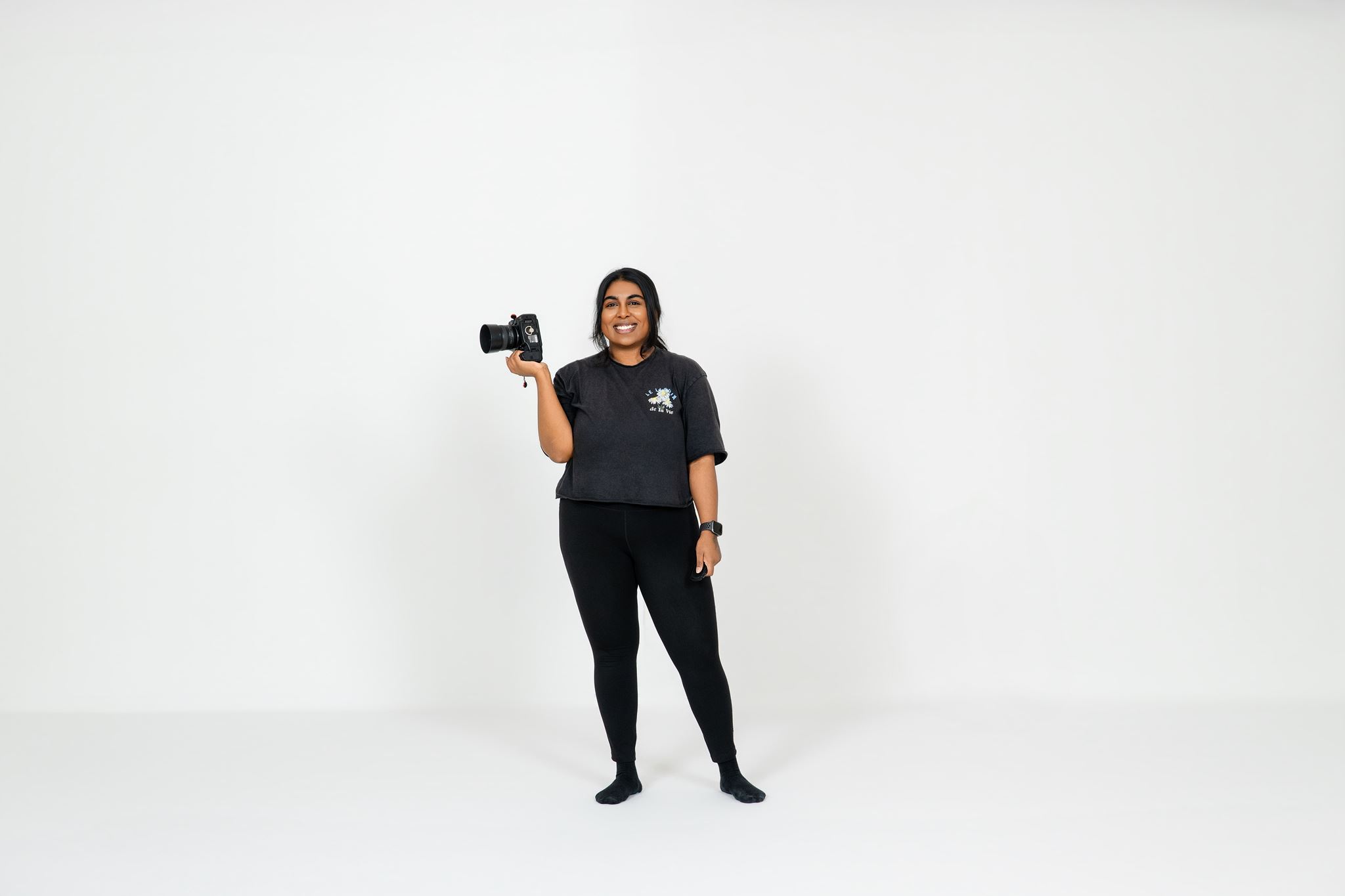
I know Photography by Nimmy is real. I know the years of work behind it. I know the businesses and people I’ve photographed, the weddings, commercial projects, events, galleries delivered, emails, invoices, referrals, mistakes, late-night editing sessions and all of the very unglamorous things that actually make up running a business.
Somebody hearing my name for the first time doesn’t know any of that.
If I approach a business in Whangārei or elsewhere in Northland that I’d genuinely like to work with and they Google me afterwards, what do they see? Can they work out who I am? Can they see real work? Are there reviews from people I’ve actually worked with? If they come across one of my professional headshot, team photography or business branding pages, does that match what I’ve just told them I do? If they spend another five minutes looking, does the story continue to make sense?
I think that’s useful for any business to consider, not just photographers. I’ve written before about how to choose a commercial photographer in Whangārei, and one of the things I encourage businesses to do is look beyond whether a portfolio simply looks nice. Does the photographer seem to understand commercial work? Does their experience match what they’re offering? Can you see evidence that they actually do the type of work you need?
Maybe we should be applying the same thinking to our own businesses too.
How can a small business build trust online in the age of AI?
I don’t think the answer is to create more and more content just so there’s a lot of it. If anything, as AI makes it easier to produce endless blogs, images and social posts, sheer volume may become less useful as a trust signal.
Small businesses can build trust by making the real parts of the business easier to see. Keep the website information current. Show the people who actually work there. Collect genuine reviews rather than waiting until you suddenly need them. Document real projects and customer experiences where appropriate. Make contact details easy to find. Build a consistent history over time, and when AI is used in customer-facing content, think about whether the way it is being used could change what the audience believes they’re seeing.
The good thing is that most of those trust signals don’t have to be invented.
The people exist. The work exists. The customers exist. The projects, expertise, spaces, processes and relationships exist.
Sometimes marketing is simply about making those things visible.
So what actually makes a business trustworthy now?
I don’t think there’s one answer. It isn’t simply having an expensive website, because professional-looking websites are becoming easier to create. It isn’t having a glowing testimonial on your own homepage, because people understand that businesses choose what appears there. And it probably isn’t producing more content than everybody else either.
For me, trust increasingly comes from being able to look a little deeper and find consistency. The people, work, reviews, history and things that exist outside the company’s own marketing don’t have to be perfect, but they should broadly connect.
That’s why the cold call that started all of this has stayed in my head. I wasn’t trying to catch somebody out. I was interested enough in an advertising opportunity to find out whether it might be useful for my business. I did exactly what I’d hope a potential customer would do with me, I looked a little further.
I still don’t know what to think about that particular company, and I’m comfortable leaving it there. Their explanation may be completely accurate, and their online presence may simply not reflect the size or history of the business.
What I do know is that after trying to verify what I’d been told, I didn’t feel more certain than I had before. From a business and marketing point of view, that’s interesting.
We’ve spent years learning how to make businesses look professional online. Websites are better, branding is more accessible, content is easier to create and AI is going to keep making all of that faster.
Maybe the next part is making sure that when somebody looks beyond the polish, there’s enough real evidence there for them to feel comfortable believing what they see.
Sources and further reading
- Gartner, 16 March 2026. Gartner Marketing Survey Finds 50% of Consumers Prefer Brands That Avoid Using GenAI in Consumer-Facing Content. Survey of 1,539 US consumers conducted in October 2025.
- New Zealand Commerce Commission. Buying online. Consumer guidance recommending research into traders, reviews and business information before purchasing online.
- New Zealand Commerce Commission. Online reviews. Guidance stating that reviews should be genuine and presented in a way that does not mislead consumers.
- New Zealand Commerce Commission. Online sales practices. Guidance covering substantiation of online claims and social proof.
- New Zealand Commerce Commission, 11 August 2026. The TV Shop to pay $1.104m for conduct that included misleading customers.
- Yang, J. and Lee, S. S., 2026. Caught in the Act: Natural recognition of deepfake UGC ad, expectancy violation and consumer responses. Journal of Retailing and Consumer Services, Vol. 88.
- Zhang, Y. and He, A-Z., 2025. The impact of AI influencer endorsements on consumers’ purchase intentions: the serial mediating roles of mind perception and brand trustworthiness. Journal of Product & Brand Management, Vol. 34, Issue 5.
.webp)


.webp)
.webp)