
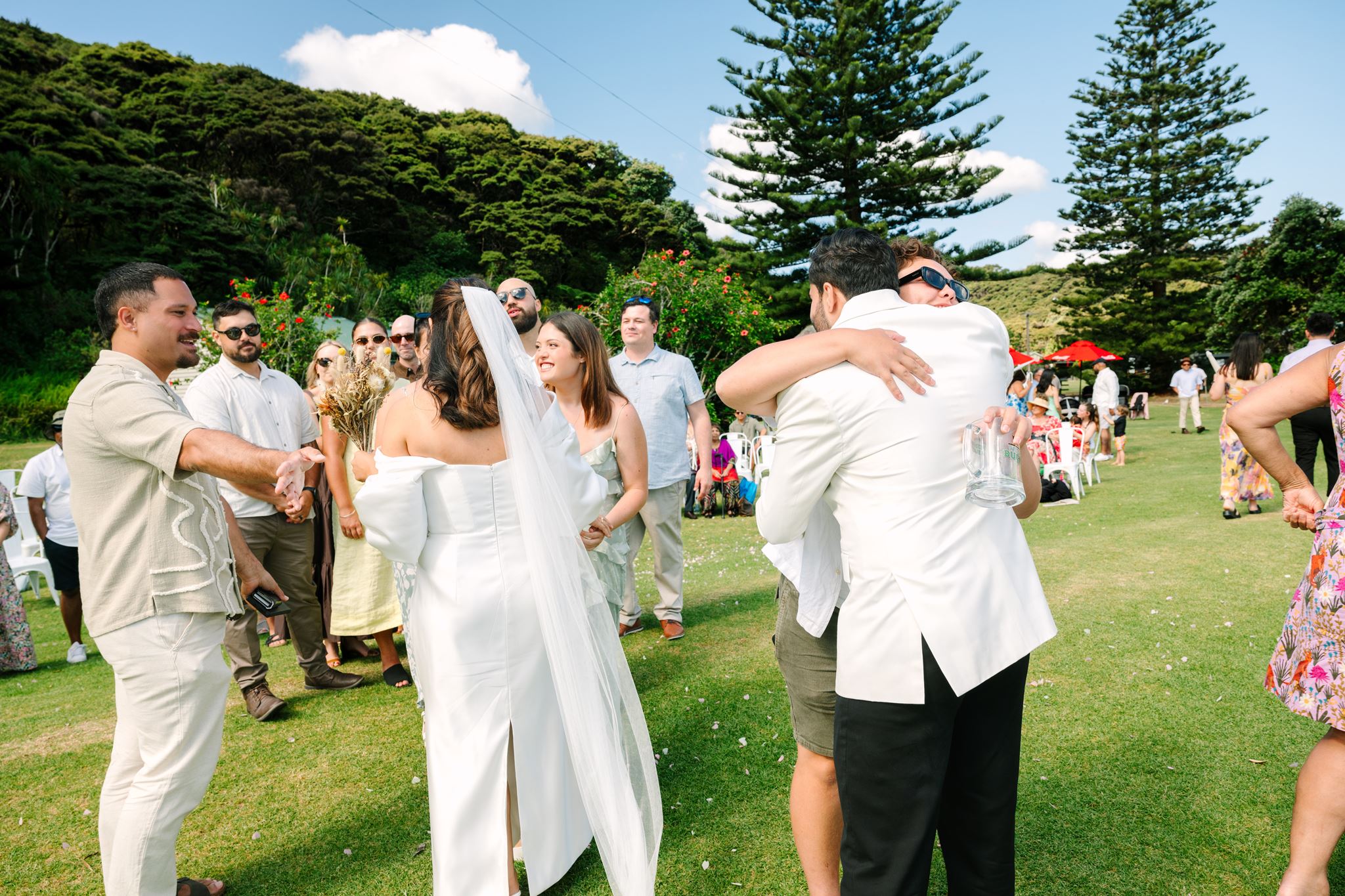
Booking Your Northland Wedding Photographer for Spring & Summer 2026–27?
If you're reading this in the middle of a Northland winter, your wedding probably still feels a long way off. Spring and summer have that effect. The warm-weather dates feel like they belong to a version of next year you haven't quite met yet, so it's easy to file "book the photographer" under later.
Here's the honest version though: for wedding photography in Whangārei and across Northland, winter is exactly when the good spring and summer dates get taken. Not because anyone's trying to rush you, but because the couples getting married in November, December, January and February are mostly locking things in right now. If you want a particular Saturday in peak season, the quiet months are when you go and get it.
This guide walks through why the timing works the way it does, when to actually book, and how to choose coverage that fits the kind of day you're planning, without turning the whole thing into a stressful countdown.
Why winter is when spring and summer weddings get booked
Northland weddings cluster hard around the warm months. From roughly late October through to March, the weather is on your side, the light is long, the gardens and beaches are at their best, and most couples want to be outside. That's wonderful. It also means a lot of people are competing for the same handful of good-weather Saturdays.
Photographers can only shoot one wedding a day. That's the bit couples sometimes forget. A venue might take two events in a weekend, a celebrant might do a Friday and a Saturday, but your photographer is yours for the whole day or not at all. So when a peak-season date goes, it's genuinely gone.
What that means in practice: the popular dates for spring and summer 2026–27 are being claimed through winter 2026. If you've got your heart set on a specific weekend (a long weekend, a date that means something to you, the Saturday closest to your anniversary), the safest move is to sort your photographer before the date is decided for you.
None of this is meant to pressure you. It's just how the calendar works up here. Knowing it early simply puts you in control of your own timeline instead of scrambling later.
So when should you actually book?
The short answer most couples are looking for: eight to twelve months out is the comfortable window, and longer is fine if you already know your date.
Here's how that tends to play out in Northland:
- A summer 2026–27 wedding (Dec–Feb): ideally book mid-2026. That's now. If you're reading this with a December or January date in mind, you're right on time, not early.
- A spring 2026 wedding (Sep–Nov): this is getting tight for the best photographers. Don't wait. Reach out as soon as you have a date and venue.
- An autumn 2027 wedding (Mar–May): you've got more breathing room, but the strongest dates still go first. Six to nine months out is sensible.
If your date is locked but nothing else is, that's completely fine. You do not need your full plan figured out to book a photographer. Date and rough location are enough to hold things in place. Everything else, like the timeline, portrait plan, second shooter and the shape of the day, can be sorted closer to the time. I'd genuinely rather hold your date now and refine the details together later than have you wait until everything's perfect and find the day's already taken.
What spring and summer actually look like across Northland
One of the nice things about a warm-season wedding here is how much the region gives you. Northland has range, and the back half of the year is when it really shows off. Worth thinking about which version of it suits your day.
Whangārei
Whangārei in summer is harbour, gardens, bush and that golden late light that stretches well into the evening. Long daylight is a quiet gift for your photos. It gives room to break portraits into smaller pockets across the day rather than one big block, so you're not pulled away from your own party. The district is bigger than people expect, so if getting ready, the ceremony and the reception are in different spots, a little planning protects your time and keeps the light working for you.
Waipu
Waipu leans coastal and open, and summer suits it. Beach, big sky, warm evenings, that relaxed end-of-day feeling. The weather is more of a character here, in the best way, and the atmosphere tends to build slowly from prep through to sunset. That's exactly why fuller coverage often makes sense for a Waipu wedding: the day genuinely changes as it goes, and the gallery is richer for following it.
Kerikeri
Kerikeri brings gardens, history, produce and a softer, layered feel. Spring is lovely here as everything comes back into bloom, and summer holds that warm, settled, slightly old-world texture. If you want photos that feel grounded in place rather than forced into a formula, the local character does a lot of the work for you.
Matakana and beyond
Matakana has the polished vineyards-and-weekend-away energy, and it draws couples who want relaxed but refined. As a destination-style extension of a Northland day, it works beautifully in the warmer months. If you're planning something a little further afield, it's worth flagging early so travel and timing can be built in properly.
Choosing coverage that fits a warm-season day
Summer days are long, which changes the maths a little. With light hanging around until late, you've got more options for when portraits happen, and that flexibility is worth using well rather than wasting.
A few things worth thinking through as you book:
How long is your day, really? A relaxed summer wedding often runs longer than couples first estimate. Prep tends to start in warmth and ease, ceremonies sit later to dodge the harshest midday sun, and receptions stretch into those beautiful long evenings. If your day has a slow, full arc to it, shorter coverage can leave the best bits undocumented: golden hour, the evening loosening-up, the dancing.
Where does golden hour land? In a Northland summer, the best light often arrives well after the ceremony, sometimes during dinner. A photographer who knows the season will plan a short portrait window around that light rather than rushing you off at the wrong time. Ten quiet minutes at the right moment beats an hour at the wrong one.
Do you want a second shooter? Not everyone needs one, but for larger weddings, multi-location days, or couples who want both partners' prep covered at the same time, it can be the difference between a complete story and a partial one. If you're unsure, my guide on second shooters, add-ons and extras breaks down when they actually earn their place.
The underlying principle is the same one behind all my wedding work: the photos should be built around the real rhythm of your day, not the other way round. You shouldn't have to bend your whole celebration around the camera. Good coverage and good timing mean you don't.
What about an engagement session before the day?
If you book early, which for spring and summer you ideally should, you also give yourself room for an engagement session beforehand. And in the warmer months, that's a genuinely lovely thing to have.
A pre-wedding session isn't about ticking a box. It's about taking the camera weirdness out of the equation before the day that actually matters. You get used to how I work, you realise you don't have to perform to look like yourselves, and you arrive at the wedding already comfortable. Booking early is what makes that possible. Leave it too late and there's simply no gap in the calendar to fit one.
Spring and early summer are great for this too: blossom, fresh green, mild evenings, and locations that aren't yet baked by peak heat. If you're curious, my engagement photos guide for Whangārei and Northland covers the best spots and timing.
A simple way to think about your timeline
If all of this feels like a lot, here's the calm version:
- Lock your date and rough location. Even loosely. This is the only thing you truly need before booking a photographer.
- Reach out early, in winter for a warm-season wedding. The quiet months are when the good dates are still open.
- Hold your date first, refine the details later. Coverage length, timeline, portrait plan and extras can all be sorted together closer to the time.
- Leave room for an engagement session. Booking early is what makes that possible.
- Then let the rest of the planning breathe. With the photographer sorted, one of the bigger pieces is off your plate.
That's it. The point of doing it early isn't to rush. It's so the day itself can stay relaxed.
Planning a spring or summer 2026–27 wedding in Northland?
If you've got a warm-season date in mind, now's the right time to have a chat, even if everything else is still up in the air. You can view my wedding photography packages and approach here, or get in touch to check whether your date's still open. The sooner we talk, the more choice you've got, and the less you'll have to think about it later.
FAQs
How far in advance should I book a wedding photographer in Northland?
For spring and summer weddings, eight to twelve months ahead is the comfortable window, and the warm-season Saturdays are mostly booked through the preceding winter. If your date is set, earlier is always safer, because photographers can only shoot one wedding a day, so popular dates go quickly.
Can I book before I've finalised my wedding plans?
Yes. You only need your date and a rough location to hold things in place. Coverage length, timeline, portrait plans and extras can all be worked out together closer to the day.
Why do summer weddings book up so fast in Whangārei?
Northland weddings cluster around the warm months for the weather, light and outdoor settings, so a lot of couples are after the same handful of good-weather dates. Since a photographer can only cover one wedding per day, peak-season Saturdays fill early.
How much coverage do I need for a summer wedding?
It depends on the shape of your day, but long summer days often suit fuller coverage because the celebration builds from prep through to a late golden hour and into the evening. Shorter coverage can mean missing the best evening light and the relaxed later moments.
Is an engagement session worth it before a summer wedding?
For most couples, yes. It helps you get comfortable in front of the camera before the day that counts, and the milder spring and early summer light makes for lovely pre-wedding photos. Booking your photographer early is what leaves room to fit one in.
.webp)

.webp)
.webp)